

Front-End Reset: 11 Trends Project Owners Can’t Ignore in 2026

What worked? What didn’t? And what needs to change before the next wave of projects begins?
Across energy, mining, infrastructure, renewables, nonprofits, and the public sector, we are seeing clear shifts in how owners and leadership teams approach the front end of work.
Here are the key trends we're seeing and why they matter.
1. Owners Are Reinvesting in Front-End Capability - not just the process
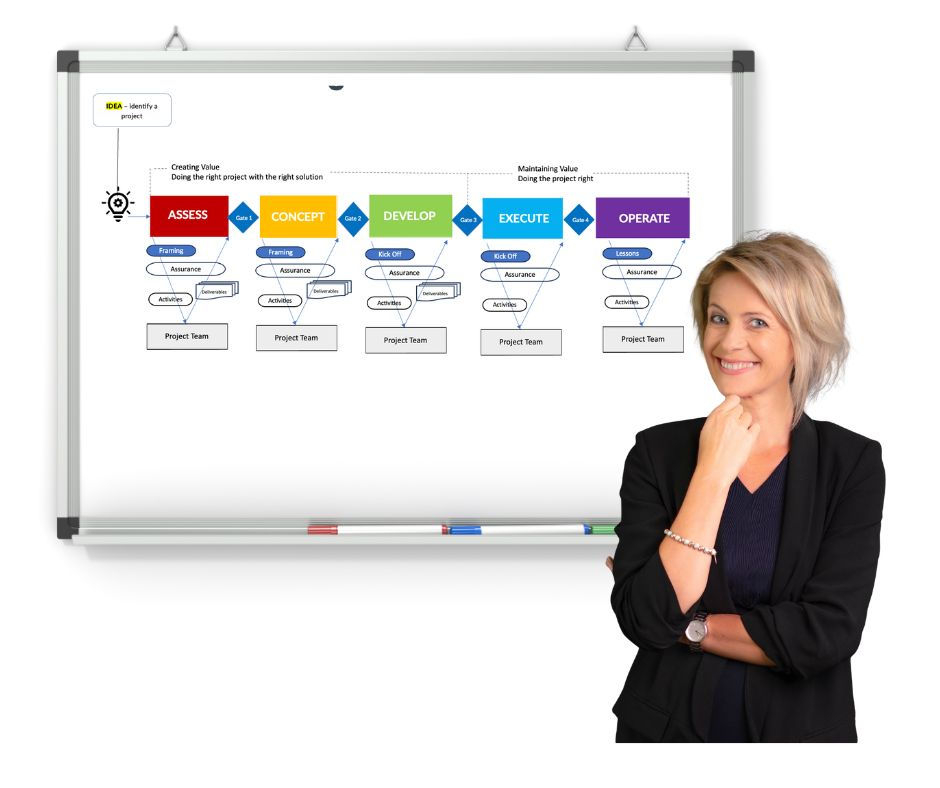
There is growing interest in Decision Gate training that covers project development process - among owner organizations, but not in the traditional sense of compliance or documentation.
What leaders are want is:
hands-on capability building
practical guidance rooted in real decisions
teams who understand why the process exists and how to use it - not just how to follow it
The focus has moved from having a Decision Gate to using it well.
2. Many Organizations Are Quietly Re-Examining Their Governance Process
A trend I see more often - though rarely spoken out loud - is leaders asking:
“Does our governance process actually help us make better decisions?”
Organizations are beginning to:
review the governance process guidelines
simplify over-engineered requirements
question whether documentation supports decision quality or just compliance
For many, this is the first step toward refreshing governance so it works in practice, not just on paper.
3. Opportunity Framing Is Becoming Recognized as a Missing Capability
More owners are realizing that framing the opportunity well is a skill - not a meeting.
They are investing in:
structured and facilitated opportunity framing
testing assumptions and exploring options
clearer definitions of value and success
This shift reflects a deeper understanding: 👉 The quality of execution is often shaped by the quality of framing.
4. Innovation Is Moving Upstream - to the Front End
Owners are acknowledging that faster, more innovative projects don’t come from tighter schedules later - they come from better thinking EARLIER.
Innovation is showing up in:
how problems are defined
how options are explored
how constraints are challenged before solutions are locked
The front end is becoming a design and discovery space, not a formality.
5. Project Professionals Are Outgrowing Traditional Project Management
Many project professionals - especially those entering energy, infrastructure, and public-sector work from other industries - are recognizing the limits of heavy execution-focused approaches too early.
They are seeking:
better ways to initiate projects
structured stakeholder alignment
facilitation-led approaches that deal with complexity, not just schedules
The question is shifting from “How do we deliver?” to “Are we solving the right problem?”
6. Large Consulting & Engineering Firms Are Reaching Out for Specialist Expertise
Another clear trend: large consulting and engineering firms are increasingly reaching out for deep front-end expertise.
Why?
their clients are demanding stronger early decisions
complexity is increasing
internal capability is stretched
Specialist skills in framing, facilitation, governance, and decision quality are being pulled into larger teams to strengthen the front end of major programs.
7. Renewable & Transition Projects Are Forcing Reflection, Not Just Retrenchment
Funding cuts and resets in renewable and transition projects are triggering something important.
Rather than abandoning work, many organizations are:
reflecting on what has already been done
capturing lessons and knowledge
revisiting assumptions and strategy
improving how early decisions are made
This pause is creating space for better front-end thinking.
8. Local Governments Are Seeking Owner’s Engineer Support Earlier
Across infrastructure and public-sector projects, I’m seeing local governments reach out earlier for owner’s engineer and advisory support.
Why?
repeated project overruns
public scrutiny
loss of trust
There’s a growing recognition that strong governance, early decision support, and independent challenge are essential - not optional.
9. New Investors Are Entering the Energy Market and Building Their Own Owner Teams
New investors entering energy and infrastructure are not relying solely on contractors to set direction.
Instead, they are:
building internal owner's teams
seeking owner’s engineer support
setting up governance and decision frameworks early
investing in front-end clarity before committing capital
This is a sign of a more mature investment mindset.
10. Summits Are Becoming Decision Platforms, Not Just Events
There is renewed interest in summits, leadership forums, and cross-stakeholder gatherings with a clear expectation:
👉 They must lead to decisions and action.
Organizations are moving away from inspiration-only events and toward:
outcome-driven summits
facilitated alignment across diverse groups
structured conversations that surface real issues
Summits are increasingly used as front-end alignment and decision tools.
11. AI Is Exposing Weak Front-End Thinking - Not Replacing It
As AI tools become more common in project planning, analysis, and reporting, an important pattern is emerging:
👉 AI amplifies the quality of the input it receives.
Organizations are discovering that:
unclear objectives produce misleading AI outputs
poorly framed problems lead to confident-looking, but wrong recommendations
misaligned stakeholders still disagree - faster
As a result, owners are realizing that AI cannot compensate for weak front-end work.
Instead, AI is increasing demand for:
clear problem statements
well-framed decisions
explicit assumptions and constraints
structured governance and decision logic
In practice, teams that invest in opportunity framing, alignment, and decision quality early are the ones actually benefiting from AI - while others are simply accelerating confusion.
A Final Thought
The common thread across all these trends is simple: The front end matters more than ever.


Comments